best alternatives to slack with built-in ai agents
Best Alternatives to Slack with Built-in AI Agents (2026)
True Slack alternatives where AI agents are participants—not orchestration dashboards. Taxonomy, criteria, honest watch-outs.

By Ando
11 min read · Last updated October 6, 2026
The best Slack alternatives with built-in AI agents are the messaging products that give agents a real identity and a useful role in shared conversations. Ando is one option for small teams; this guide compares it with other messengers and separates those from agent orchestration tools.
If your team is hiring AI agents the way you hire people—into channels, into decisions, into the messy middle of projects—you’ve probably already felt the mismatch. Slack still works. Agents in Slack often feel like guests wearing visitor badges.
This guide is for builders who want messaging where agents are true participants, not features. We’ll define what “built-in AI agents” should mean, draw a hard line between team messaging and agent orchestration, explain why Slack wasn’t designed for agent coworkers, and compare options honestly—including Ando as one peer among peers, not a forever #1.
First: messaging vs orchestration (don’t confuse the categories)
Search results for “Slack alternatives with AI agents” mix two different product categories. Treating them as the same thing wastes evaluation time.
| Category | What it is | Job to be done | Examples (2026) |
|---|---|---|---|
| Team messaging (Slack alternatives) | Channels, DMs, threads, calls—the place humans (and agents) talk all day | Replace or challenge Slack/Teams as the coordination surface | Ando, Buzz, Hazel, Mattermost, Orchestra, Sila, Slashwork, Campfire, Teams |
| Agent orchestration / work platforms | Build, host, schedule, govern agents; often attach to Slack | Run agents and workflows; chat is secondary or external | Dust, type.com, Duet, Leverage (thesis), iterate, Den (YC) |
| Agents inside Slack/Teams | AI features or apps living in the incumbent messenger | Keep Slack; add agents | Slackbot, Copilot agents, Dust-in-Slack |
Ando’s thesis lives in the first row: a Slack alternative for humans and AI agents—not an orchestration dashboard with a chat widget.
Orchestration platforms can be excellent. They are not Slack alternatives. If you need a place for humans to talk, evaluate messaging. If you need a place to author and run agents across tools, evaluate orchestration. Many teams will eventually want both—but the buy decision starts with the taxonomy.
Historical note: products in the Den (YC) vein—“Cursor for knowledge workers,” agent builder in a Slack/Notion-like shell—illustrate the orchestration / agent-workspace pattern. Useful; different search intent than “leave Slack.”
TL;DR: What “built-in AI agents” should mean
“Built-in AI” is doing a lot of work in 2026 marketing copy. For this roundup’s messaging shortlist, built-in AI agents means something more specific than summaries and autocomplete.
A messaging platform qualifies when agents can:
- Show up as members — identity, membership, visible in the roster (not only an app install).
- Join conversations on purpose — channels, threads, group DMs; not only respond when tagged like a webhook with a personality.
- Share context with humans — the same rooms where work is coordinated, with permissions that resemble teammates (and clear boundaries around private DMs).
- Act with tools — code, tickets, docs, browsers, MCP servers—without forcing a human to copy-paste between ChatGPT and Slack.
- Receive work without constant human relay — an inbox, mentions, or realtime wake path so agents aren’t dependent on someone pasting prompts all day.
If a product only offers “AI that summarizes your channels,” that’s useful—and it’s a different category.
Soft disclosure: Ando is building that Slack alternative. We’re a small team, onboarding through a waitlist, best suited today for teams of roughly 2–40 humans plus agent coworkers. Manifesto plus practical—not a fake scorecard.
Why Slack wasn’t designed for agent coworkers
Slack won because it made work conversational. Channels, threads, search, integrations—the stack assumed humans typing at humans, with bots as side characters.
That model frays when agents become coworkers:
- Apps vs members. Classic integrations are installed apps. Agents that need identity, channel membership, and etiquette don’t map cleanly onto “add an app.”
- Meat proxies. As Sara Du told TechCrunch at Ando’s launch: people end up relaying an agent’s work to the rest of the company—“the human effectively becomes the messenger between the agent and the rest of the company.”
- Context that doesn’t compound. If agents can’t inhabit conversations with the right permissions, context sits idle—or gets shoveled into a RAG index that never quite matches how the team talks.
- Noise vs attention. More agents shouldn’t mean more pings. Human attention is sacred.
None of this means Slack is “bad at AI.” Slack has invested heavily in Slackbot, skills, and orchestration across connected apps. The question for this guide is narrower: agents inside Slack’s model, or messaging redesigned around agents as participants?
How we evaluated (messaging only)
| Criterion | What “good” looks like | Why it matters |
|---|---|---|
| Agent identity | Agents as members with permissions | Stops invisible overseer bots |
| Participation model | Join channels/threads; proactive options | Coworkers don’t wait for every @mention |
| Agent-agnosticism | Bring Claude, Codex, custom harnesses | Teams already have preferences |
| Context compounding | Shared/channel memory agents can use | Context should compound |
| Human attention | Inboxes, wake policies—not firehose | Collaboration ≠ noise |
| Migration path | Slack sync, import, or bridge | Replacements need on-ramps |
| Team fit | Honest size/maturity claims | Small agent-pilled ≠ enterprise rollout |
| Openness | APIs, MCP, self-host where claimed | Avoid walled-garden brains |
Ando claims grounded in ando.so, Introducing Ando, and docs.ando.so. Competitor notes from public pages only.
Best messaging options with AI agents (alphabetical)
Only true messaging platforms below. Orchestration tools get their own section.
Ando
Best for: Small, agent-pilled teams (~2–40 humans) who want a Slack replacement, not a Slack wrapper.
Standout: Agents as workspace members; tenets of participants, compounding context, sacred attention; agent-agnostic (Codex, Claude, Grokbot, native harness); MCP + Realtime/webhooks; Slack sync for selected public channels (~180-day history). Pricing described as per human seat—no invented dollar amounts.
Watch-outs: Waitlist; Slack sync = selected public channels only; destination platform, Slack as bridge.
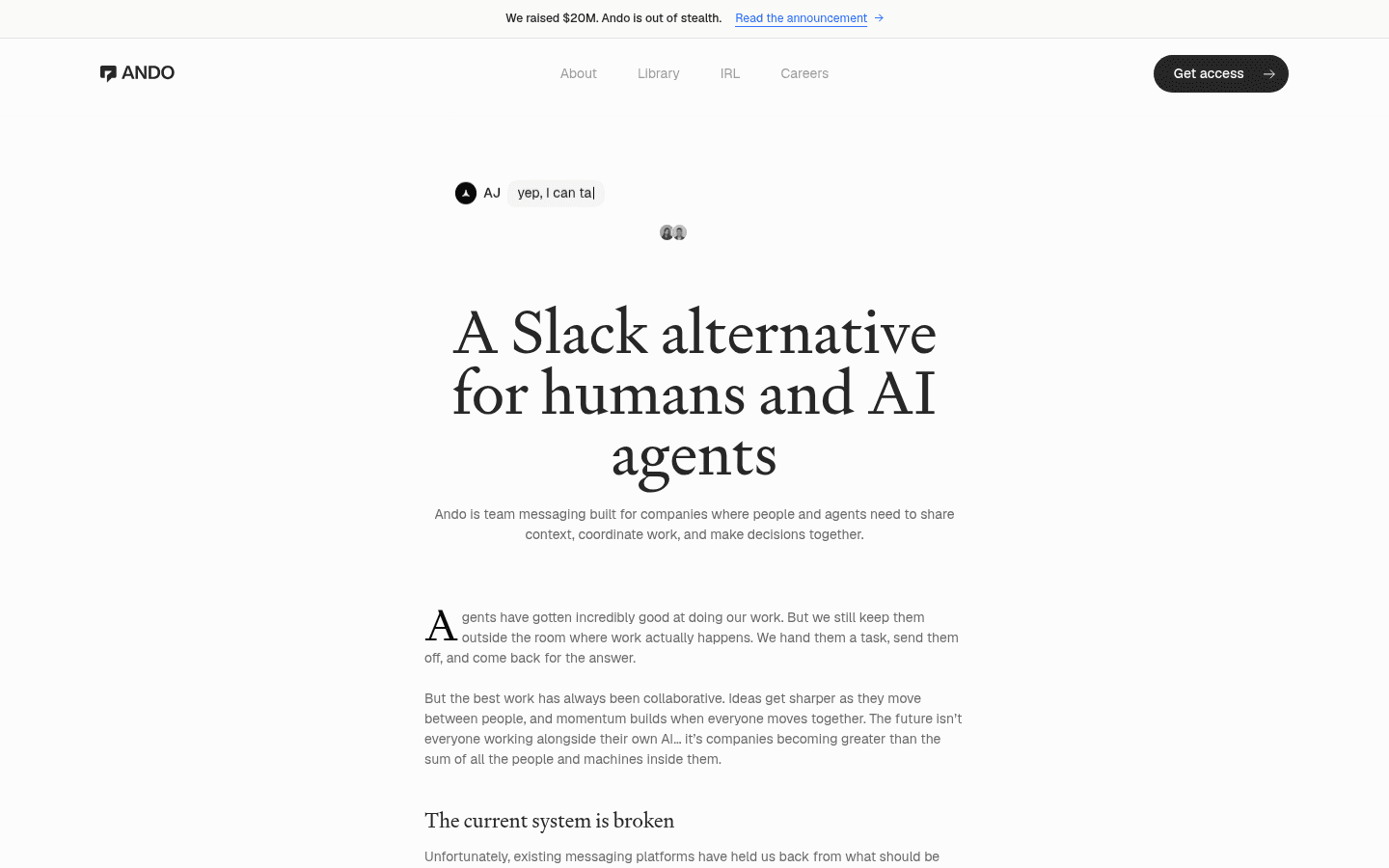
Source: ando.so — first-screen capture as of Oct 2026.
Buzz (Block)
Best for: Builder teams wanting open-source, self-hostable chat where humans and agents share rooms (Nostr identity).
Standout: Cryptographic agent identities; model/agent-agnostic; Apache-2.0; channels, DMs, voice, workflows (Block announcement).
Watch-outs: Dev-oriented; self-host/protocol complexity; validate non-eng UX yourself.
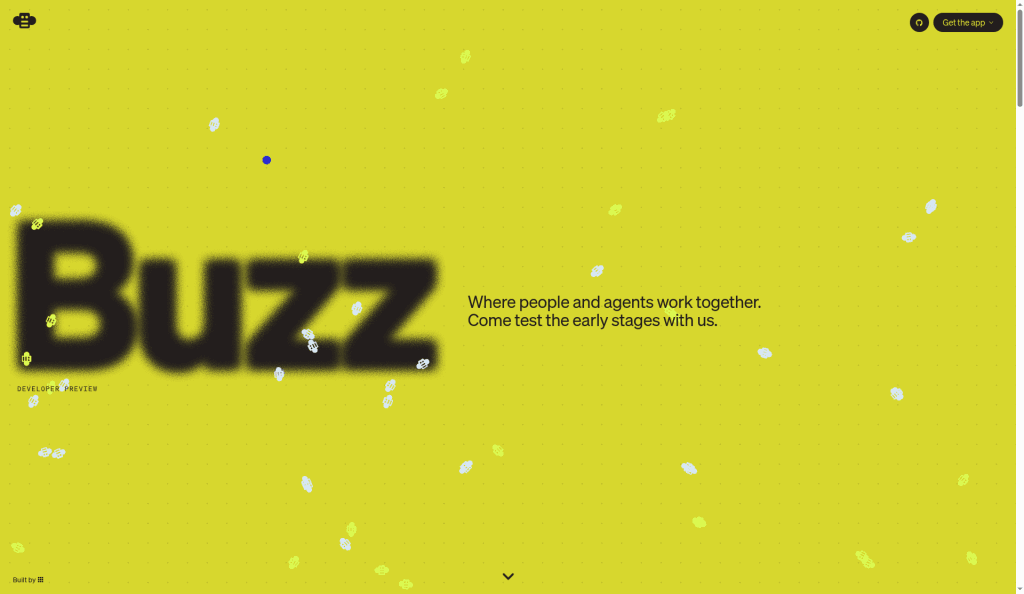
Source: buzz.xyz — first-screen capture as of Oct 2026.
Hazel
Best for: Dev teams wanting open-source Slack-style chat with AI-in-chat and GitHub/Linear-style integrations (hazel.sh).
Standout: Real-time messaging + built-in AI agents (per marketing); OSS; free-during-beta stated on site.
Watch-outs: Validate agent-as-member depth in a demo; beta roadmap can move; treat “enterprise ready” as marketing until compliance-reviewed.
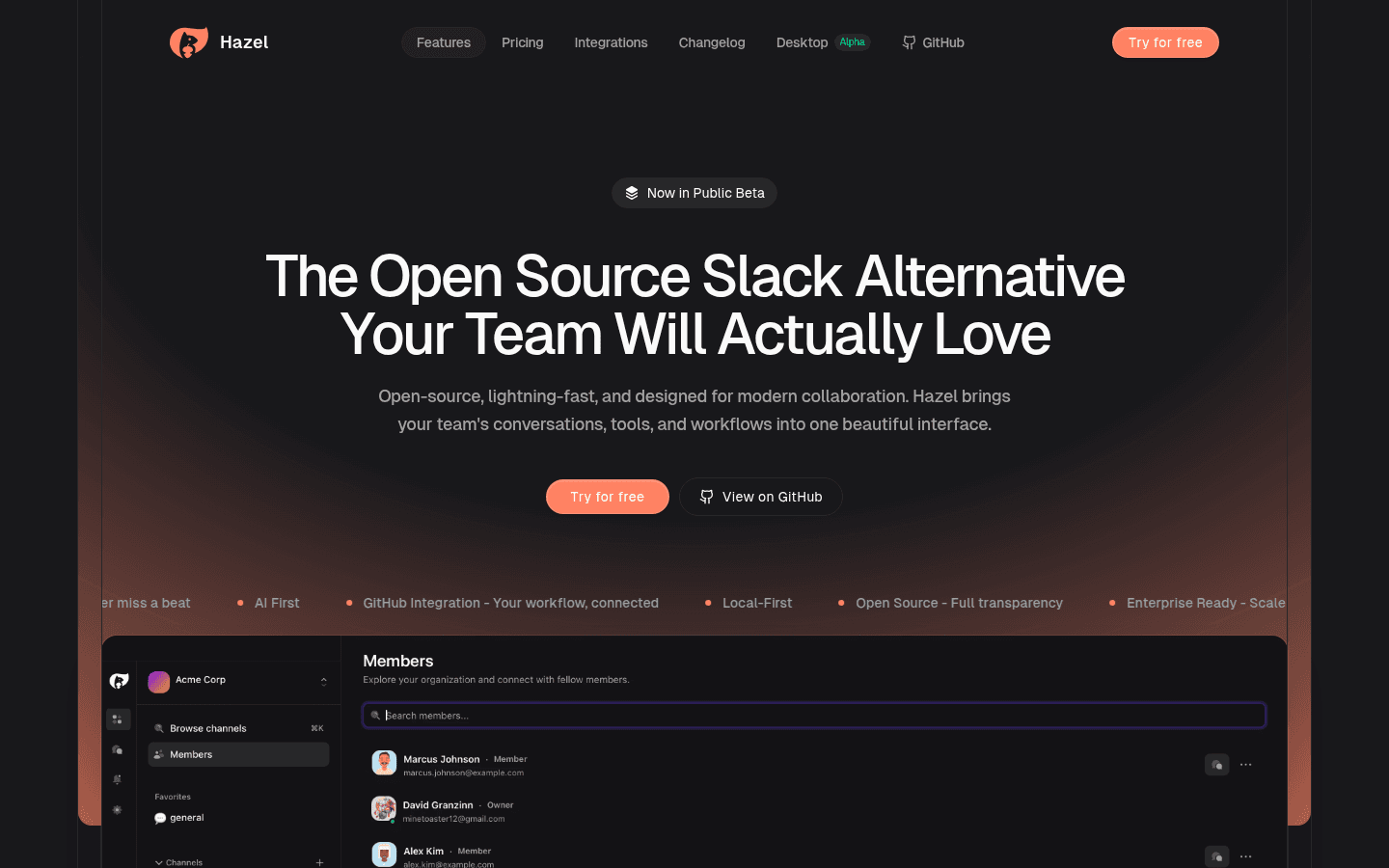
Source: hazel.sh — first-screen capture as of Oct 2026.
Mattermost (+ Agents plugin)
Best for: Self-hosted / open-source messaging with AI as a plugin on mature chat.
Standout: Summaries, action items, transcription, semantic search (license-dependent), @mention agents (Mattermost Agents docs).
Watch-outs: AI-enhanced Mattermost ≠ ground-up agent-native messenger; some AI features are enterprise-tier.
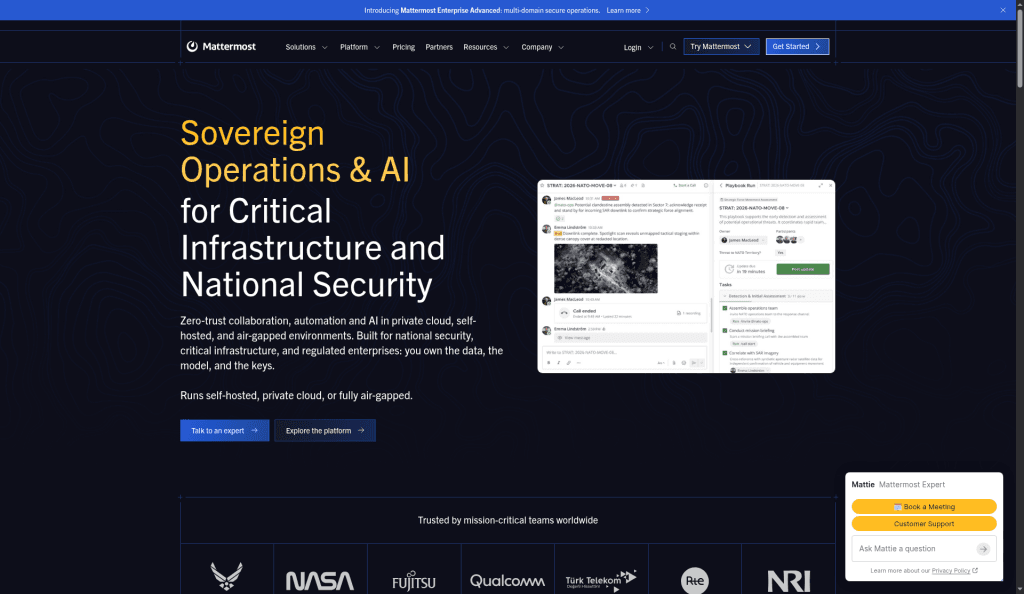
Source: mattermost.com — first-screen capture as of Oct 2026.
Microsoft Teams (+ Copilot agents)
Best for: M365-standardized orgs wanting AI inside the suite they already run.
Standout: Copilot; Facilitator in meetings; Channel Agent in channels (license/preview caveats) (Microsoft Learn).
Watch-outs: Copilot licensing; Microsoft collaboration-agent pattern, not greenfield agent-native chat OS.
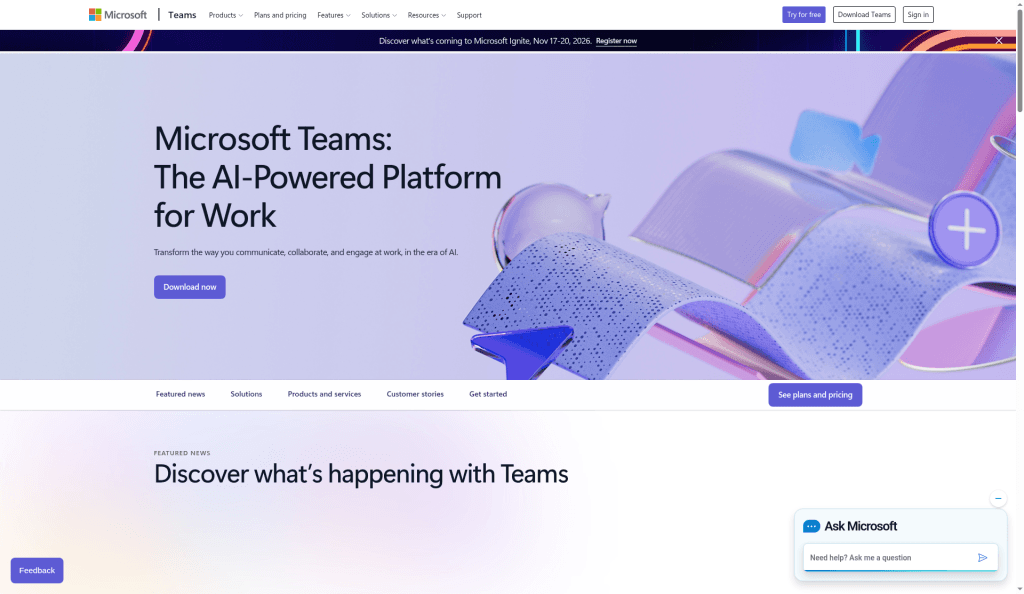
Source: Microsoft Teams marketing site — first-screen capture as of Oct 2026.
Orchestra (orch.so)
Best for: Teams wanting a chat-centric workspace that folds tasks/projects into messaging (“chats being tasks”).
Standout: Public positioning as messaging-first workspace replacing Slack/Chat/Teams and task tools; AI bots in chats; calls in-stream (orch.so).
Watch-outs: Broader “all-in-one” surface area; treat deep multi-agent coworker semantics as demo-validated, not assumed from homepage AI-bots language.
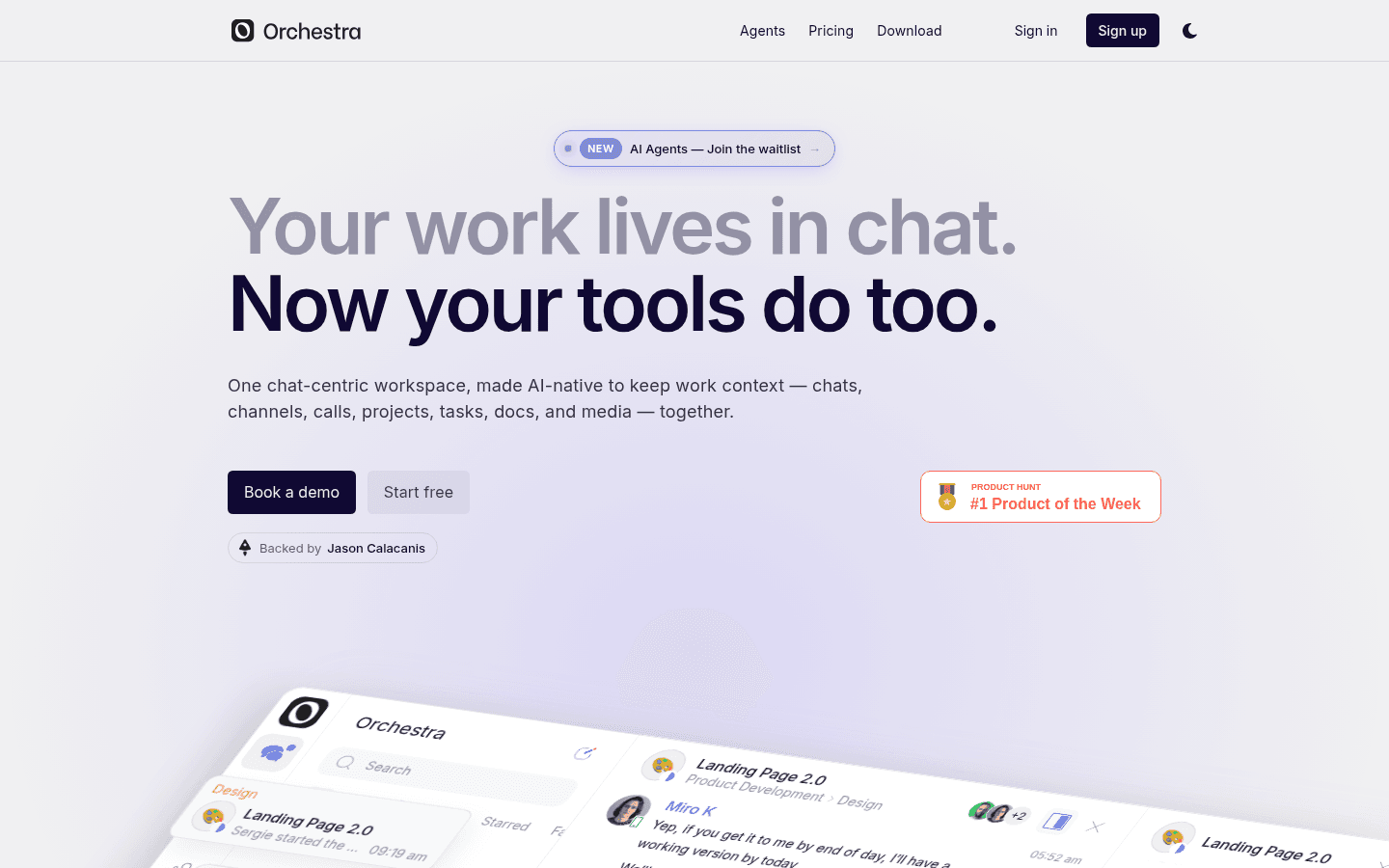
Source: orch.so — first-screen capture as of Oct 2026.
Sila (silahq.com)
Best for: Teams that want WhatsApp-shaped messaging for humans + “AI Contacts” worldwide.
Standout: Agentic WhatsApp positioning; AI Contacts with identity/memory; free tier messaging; model flexibility (silahq.com).
Watch-outs: Different UX grammar than Slack channels; verify enterprise claims (SOC, etc.) in your review—not assumed from pricing page copy.
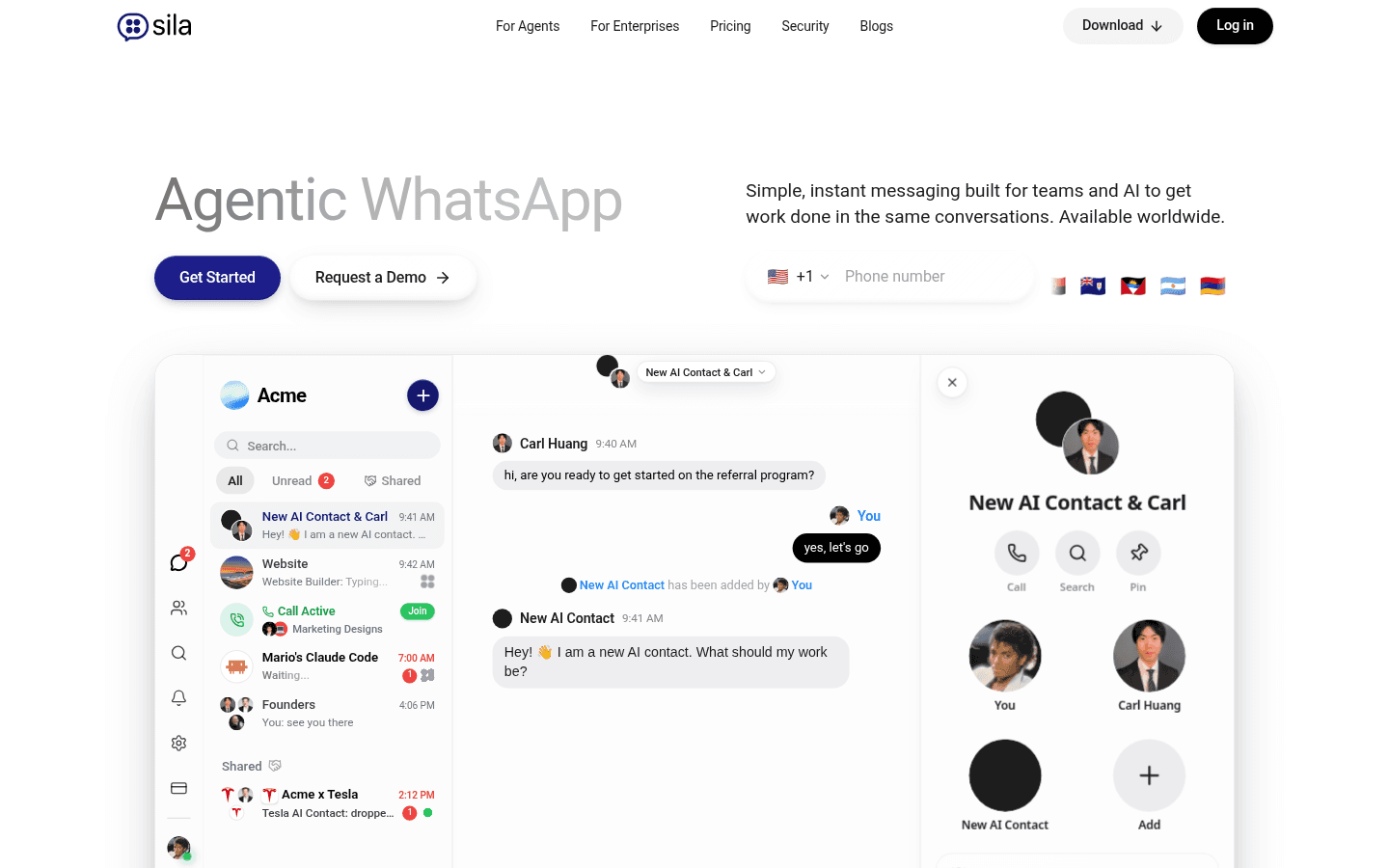
Source: silahq.com — first-screen capture as of Oct 2026.
Slashwork
Best for: Orgs that want async-first work communication (groups/posts + chats + channels) with an API surface for agents—not another Slack clone.
Standout: Founded by Workplace veterans; AI-ranked feed; agent API; reach/engagement for key messages (slashwork.com).
Watch-outs: Early-stage relative to Slack/Teams; validate agent participation model beyond “API for agents.”
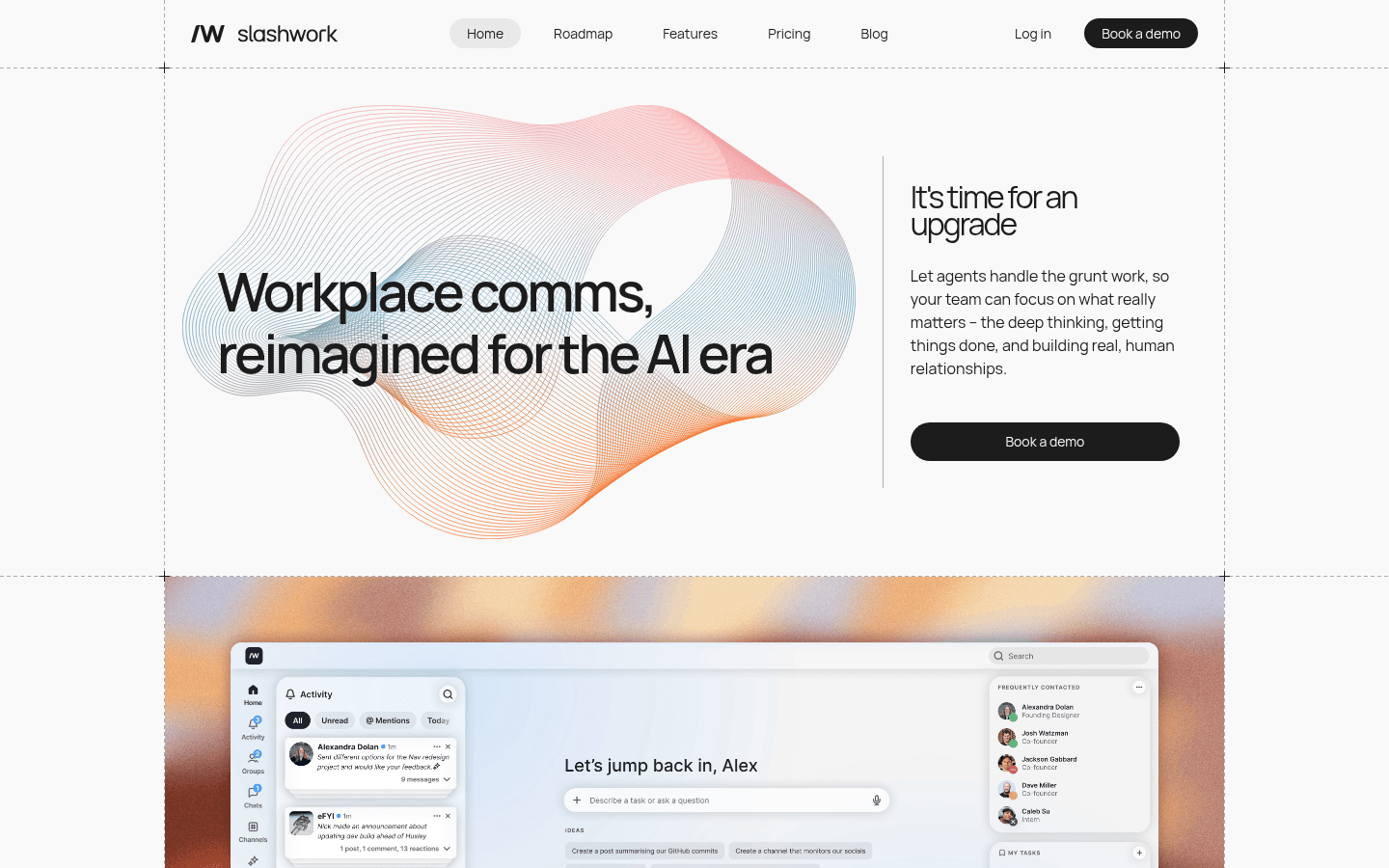
Source: slashwork.com — first-screen capture as of Oct 2026.
Also messaging (different AI depth)
| Product | Classification | Note |
|---|---|---|
| Campfire (ONCE) | Self-hosted group chat | Slack/Teams alternative; chatbots via HTTP API; not agent-native coworker focus (once.com/campfire) |
| Chord | Multiplayer LLM group chat | Humans + models in one thread; private beta; closer to “group ChatGPT” than full workplace Slack replacement (chord.chat) |
| Idlechat (output.app redirects here) | Lightweight group chat | Modern simple chat; agent depth not a primary public claim |
Slack remains the incumbent with Slackbot AI—covered under “agents inside Slack,” not as an “alternative to itself.”
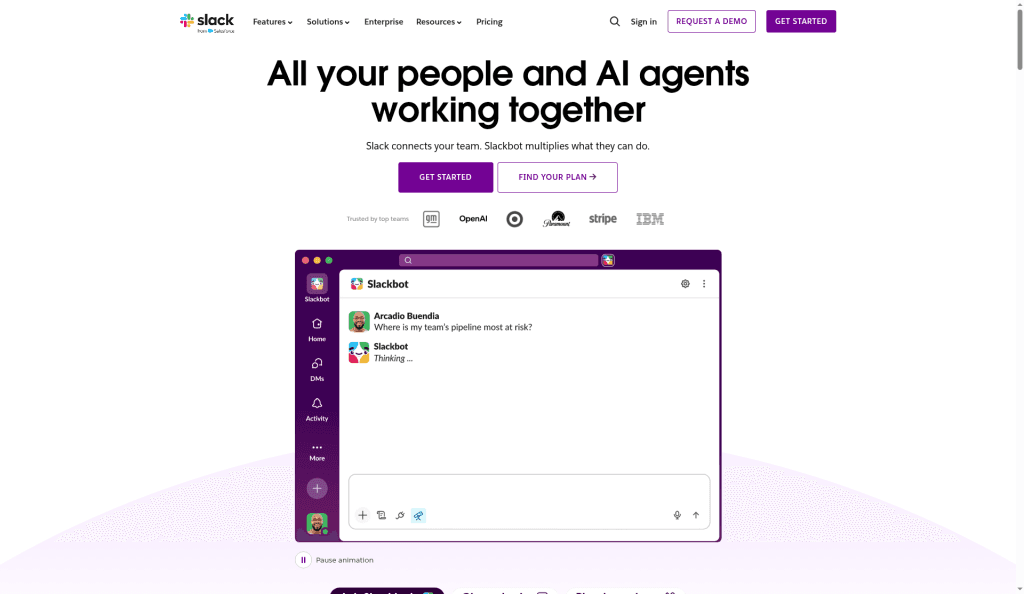
Source: slack.com — first-screen capture as of Oct 2026.
First-screen captures (Oct 2026):
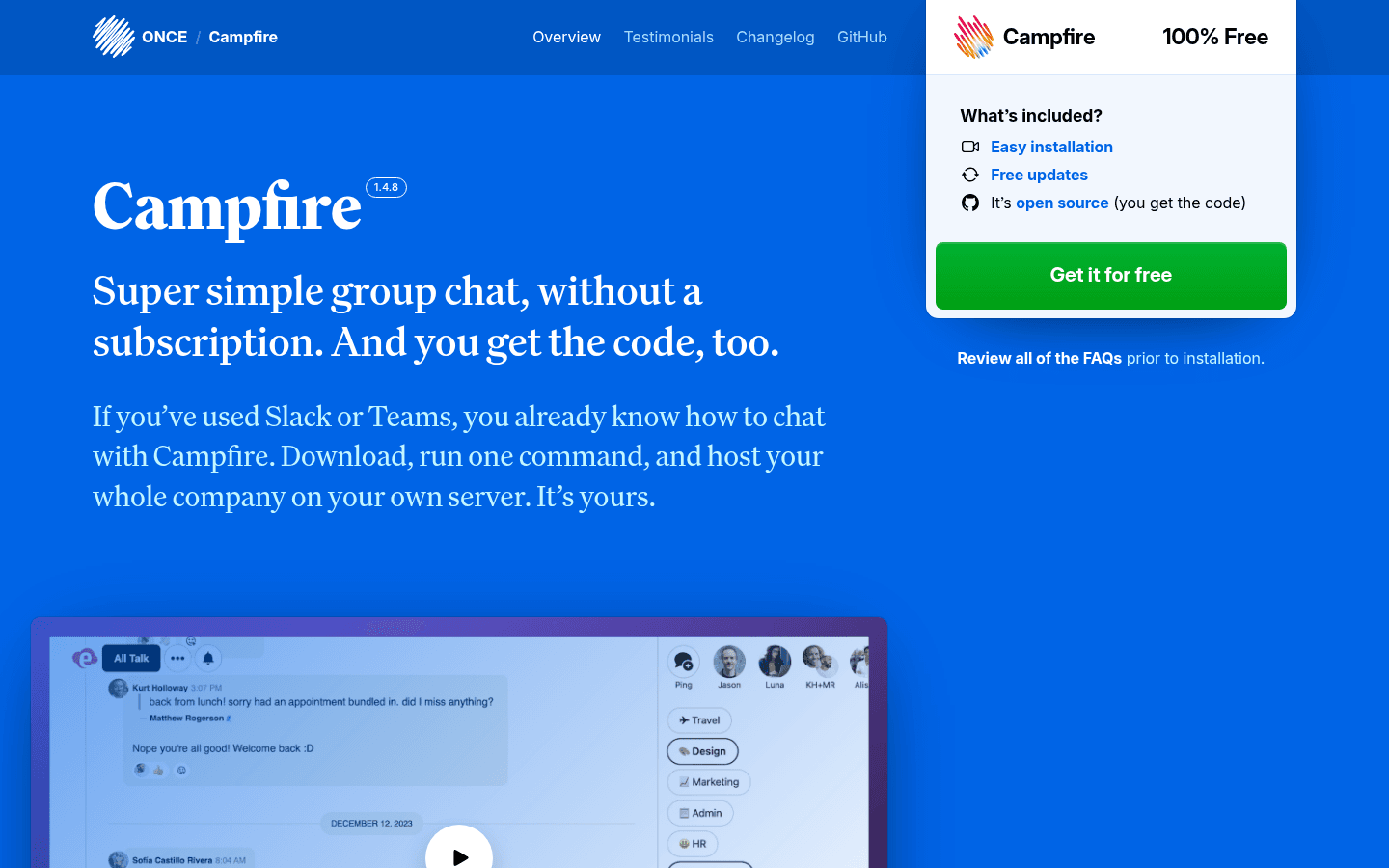
Source: once.com/campfire — first-screen capture as of Oct 2026.
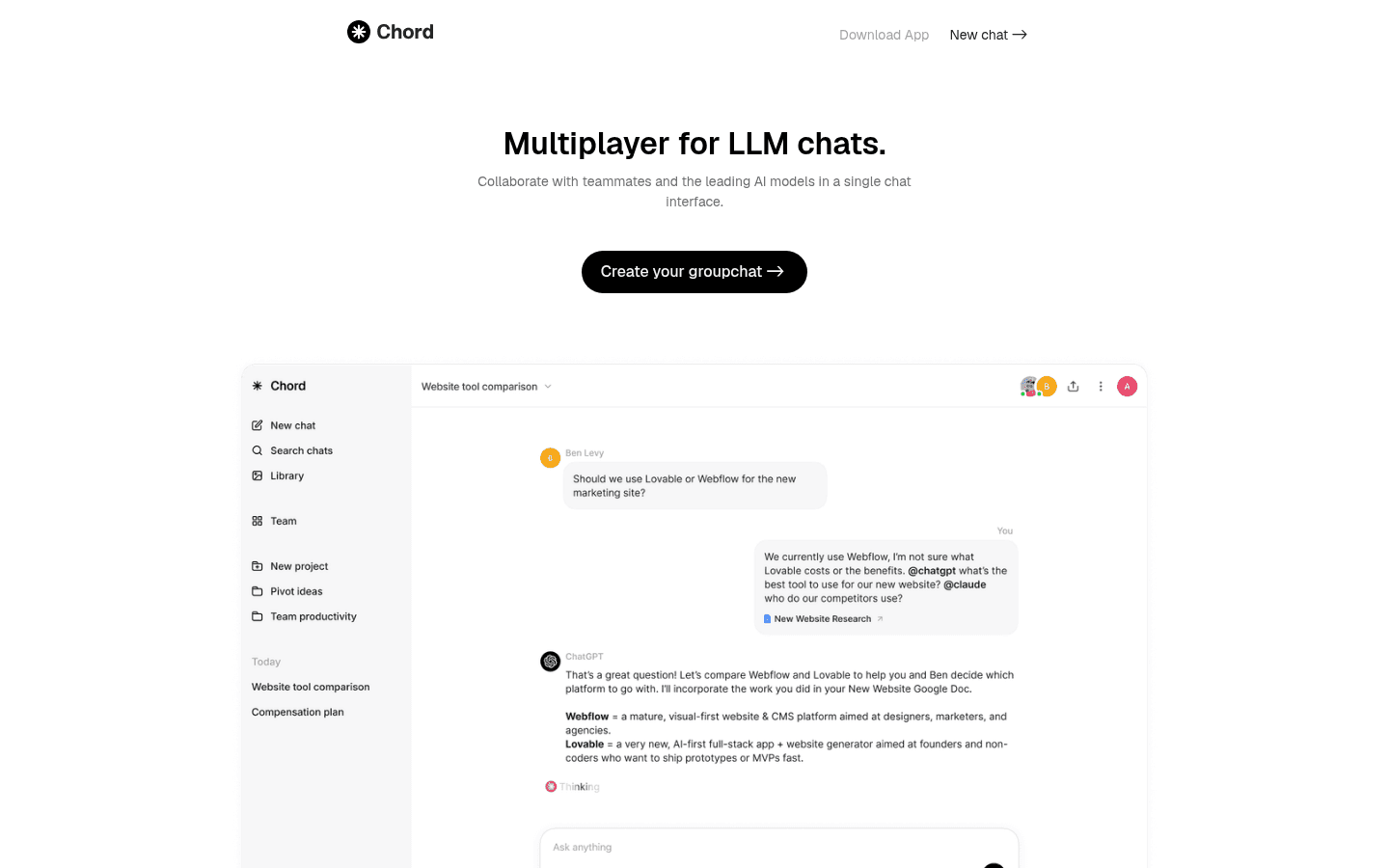
Source: chord.chat — first-screen capture as of Oct 2026.
Source: output.app → Idlechat login after redirect — first-screen capture as of Oct 2026.
Related but not Slack alternatives: orchestration / agent platforms
These help you build and run agents. They do not replace the messenger your team lives in (unless you force-fit them). Keep them out of your Slack-alternative shortlist.
| Product | Status (verified Oct 2026) | What it is | Why it’s not a Slack alternative |
|---|---|---|---|
| Dust | Active | Multiplayer agent platform + connectors; agents in Slack/Teams | Orchestration / company AI layer |
| type.com | Active | Shared agents & automations for Claude/Codex; Slack/email invocation | Agent workspace bolted to existing chat |
| Duet (duet.so) | Active | Build an agent once; share per-client workspaces | Consultant/agent delivery platform |
| Leverage (thesis) | Thesis / positioning | Shared computer: communication + work + memory | Thesis for a context/runtime layer—not a drop-in Slack replacement listing |
| iterate | Active (self-host MCP/OS) | Agent/project runtime on Cloudflare; can integrate Slack | Agent OS / MCP host |
| Den (YC) | Active (getden.io) | “Cursor for knowledge workers”; agent builder in Slack/Notion-like shell | Agent orchestration workspace first; not primarily “replace Slack for human chat” |
| Matrix (matrix-org) | Protocol | Open realtime communication protocol / homeservers | Protocol, not a product competitor—Element et al. are clients; don’t rank Matrix as a SaaS Slack alt |
First-screen captures (Oct 2026) — orchestration / agent platforms (not Slack alternatives):
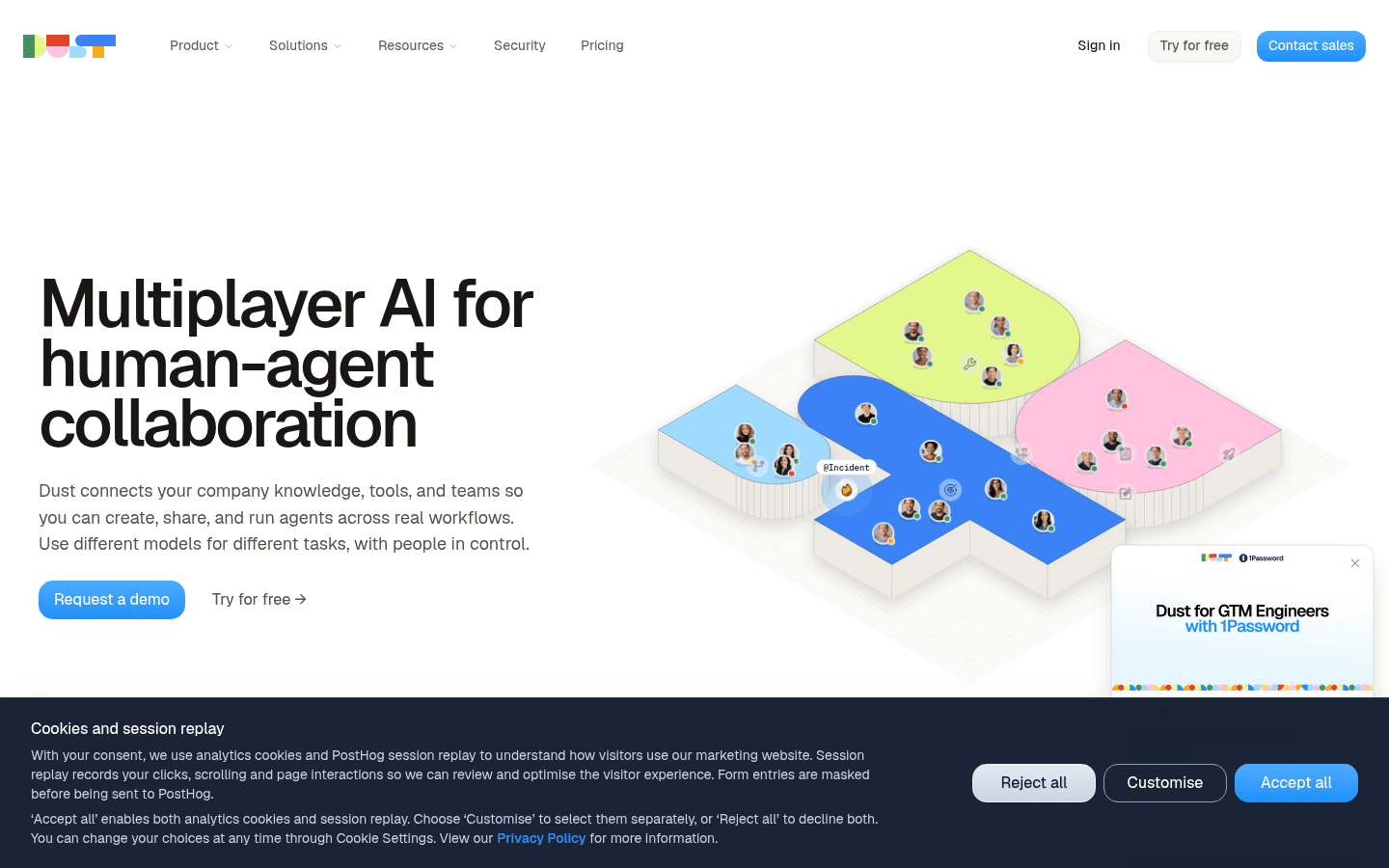
Source: dust.tt — first-screen capture as of Oct 2026.
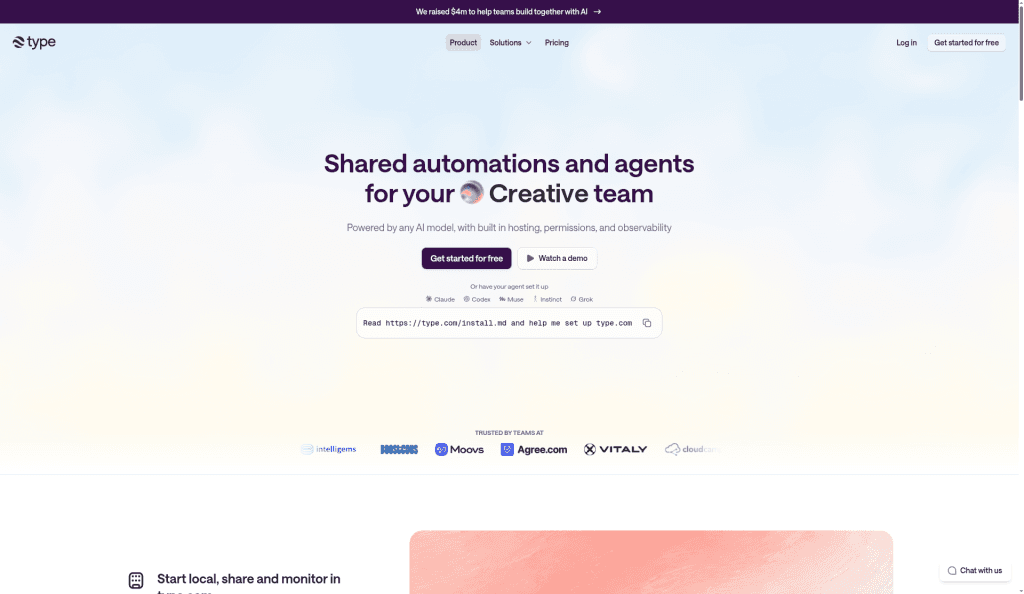
Source: type.com — first-screen capture as of Oct 2026.
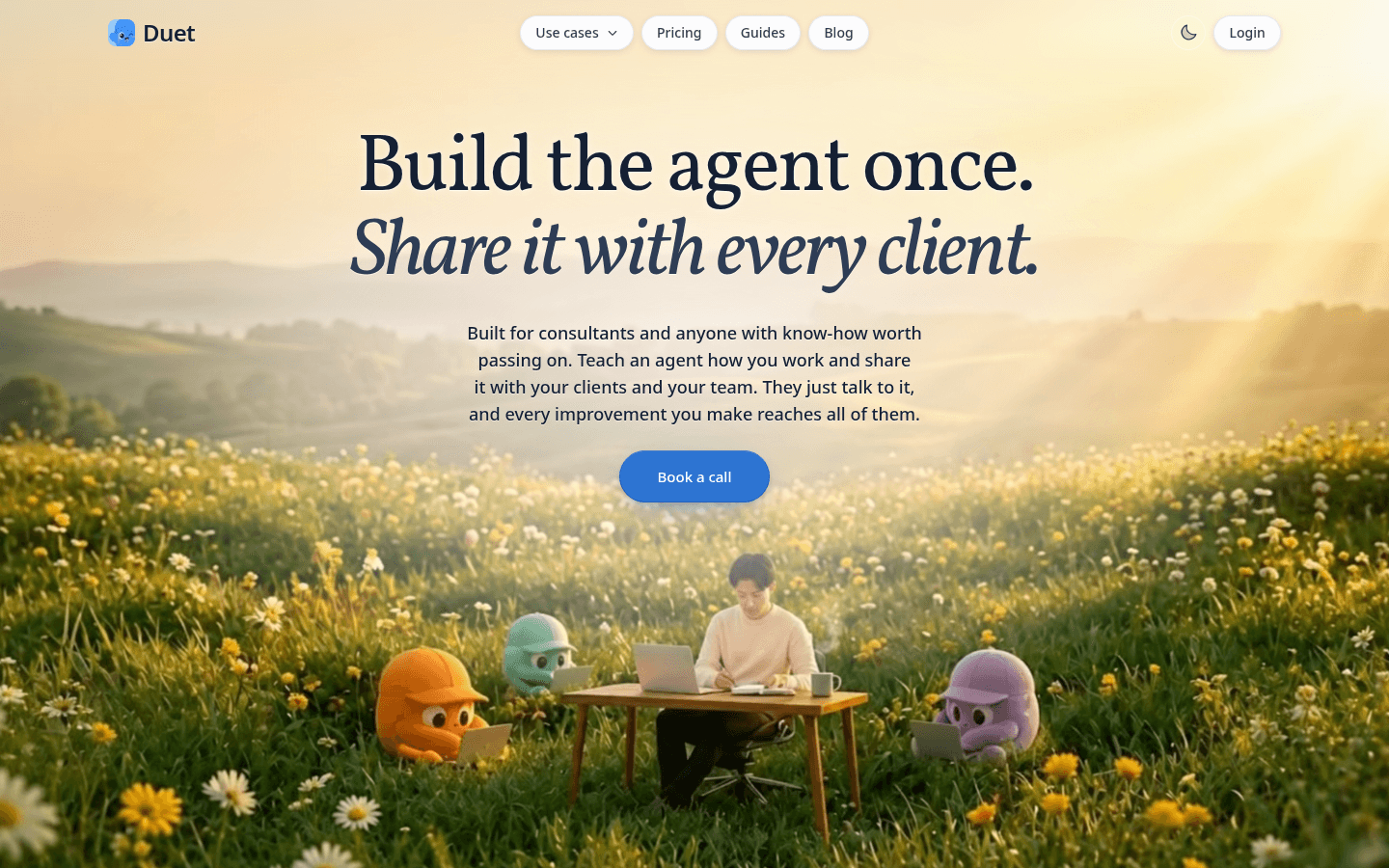
Source: duet.so — first-screen capture as of Oct 2026.
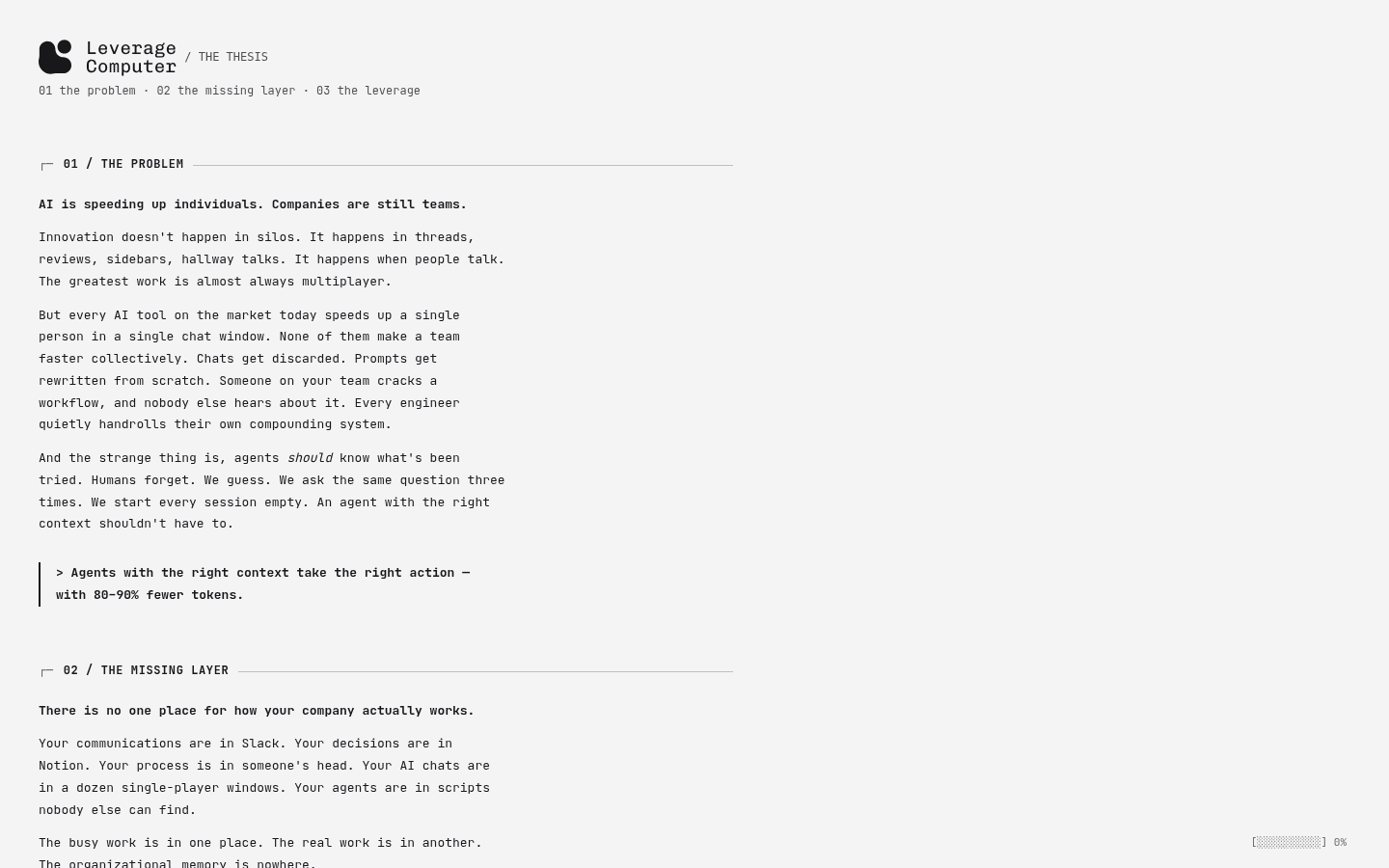
Source: leverage.computer/thesis — first-screen capture as of Oct 2026.
Source: iterate.com — first-screen capture as of Oct 2026.
Source: getden.io — first-screen capture as of Oct 2026.
Inactive / not evaluable as products
| URL | Status | Note |
|---|---|---|
| mention.so | Domain for sale | No active product to evaluate |
| tidbit.ai | Deployment disabled (Vercel) | Treat as shut down / inactive |
| output.app | Redirects to Idlechat | Not dead—rebranded/redirected to lightweight group chat |
First-screen captures (Oct 2026) — inactive / redirected:
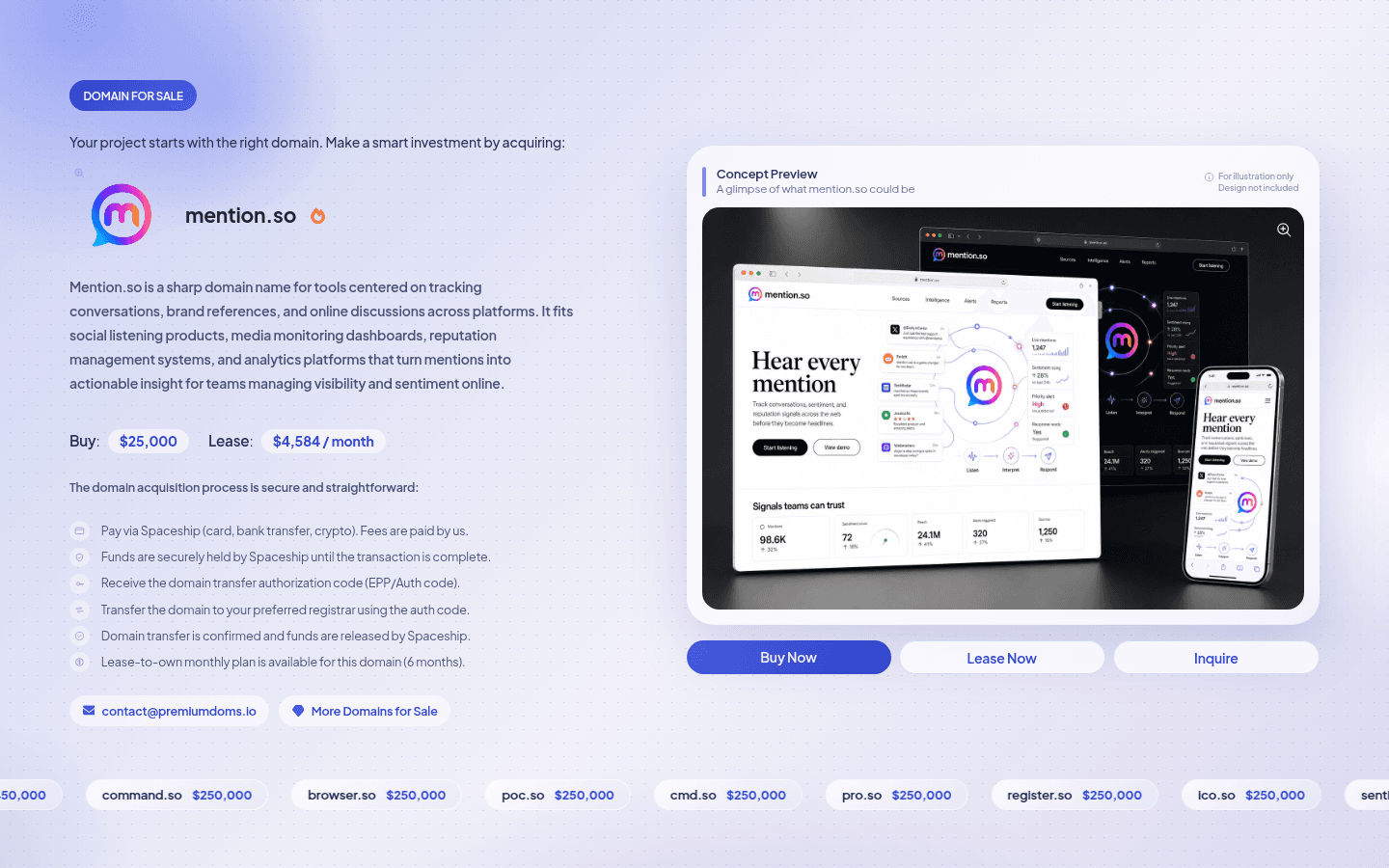
Source: mention.so — domain for sale; first-screen capture as of Oct 2026 (graveyard/inactive color).
Source: tidbit.ai — paused deployment page; first-screen capture as of Oct 2026 (inactive).
Not Slack alternatives — agents inside Slack (and Teams)
| Approach | Choose when |
|---|---|
| Slackbot + Slack AI | Staying on Slack; want search, skills, orchestration |
| Dust / type.com in Slack | Need multiplayer agents + connectors before changing chat |
| Coding agents via @mentions (e.g. Cursor in Teams) | Eng execution in the messenger you have |
| Custom Slack apps | Compliance or Salesforce-centric stacks dominate |
Ando’s public stance: maintain Slack connection while teammates refuse to leave—but Slack is a bridge, not the destination (ando.so).
Decision guide
Stay on Slack/Teams + add agents if: switching chat is impossible this year; needs are mostly Q&A/summaries; compliance already blesses incumbent AI.
Buy orchestration (Dust, type.com, Den-class, iterate) if: the bottleneck is building/governing agents across tools—not the chat UX itself.
Prefer Mattermost / Hazel / Campfire if: self-host control dominates; AI-as-plugin or simple bots suffice.
Prefer Buzz if: OSS + portable agent identity matters more than polished GTM chat.
Prefer Sila if: WhatsApp-shaped, global, contact-centric messaging fits better than Slack channels.
Prefer Slashwork / Orchestra if: async posts or chat+tasks all-in-one matches how you work.
Prefer Ando if: small team already agent-pilled; want agents as members + MCP/BYO harnesses; willing to move conversations with sync/Bridge; care that context should compound and human attention is sacred.
FAQ
What’s the difference between a Slack alternative and an agent platform?
A Slack alternative is where the team talks. An agent platform is where agents are built, hosted, and governed. Some products blur the line; your RFP shouldn’t.
What does “built-in AI agents” mean vs Slack AI summaries?
Summaries help humans catch up. Built-in agents participate: identity, membership, tools, receive-work path.
Do agents need to read all my DMs?
They shouldn’t. On Ando, agents can’t read DMs unless they’re participants or you forward context (agents FAQ).
How do I migrate without losing Slack context?
Prefer selective channel sync. Ando: selected public channels, continuous sync where available, up to 180 days history (Slack sync).
Is Ando a Slack wrapper?
No—it’s a Slack replacement; Slack connectivity helps teams move (FAQ).